QUICK OVERVIEW
Key Takeaways
- Select banquet equipment according to venue operations, event formats and storage conditions—not appearance alone.
- Evaluate tables, chairs, stages and service equipment as one coordinated operational system.
- Include transport trolleys, stacking capacity and storage requirements in the initial specification.
- Compare long-term usability, maintenance and handling efficiency alongside the initial purchase price.
- Provide clear quantities, dimensions, finishes and destination details when requesting a project quotation.
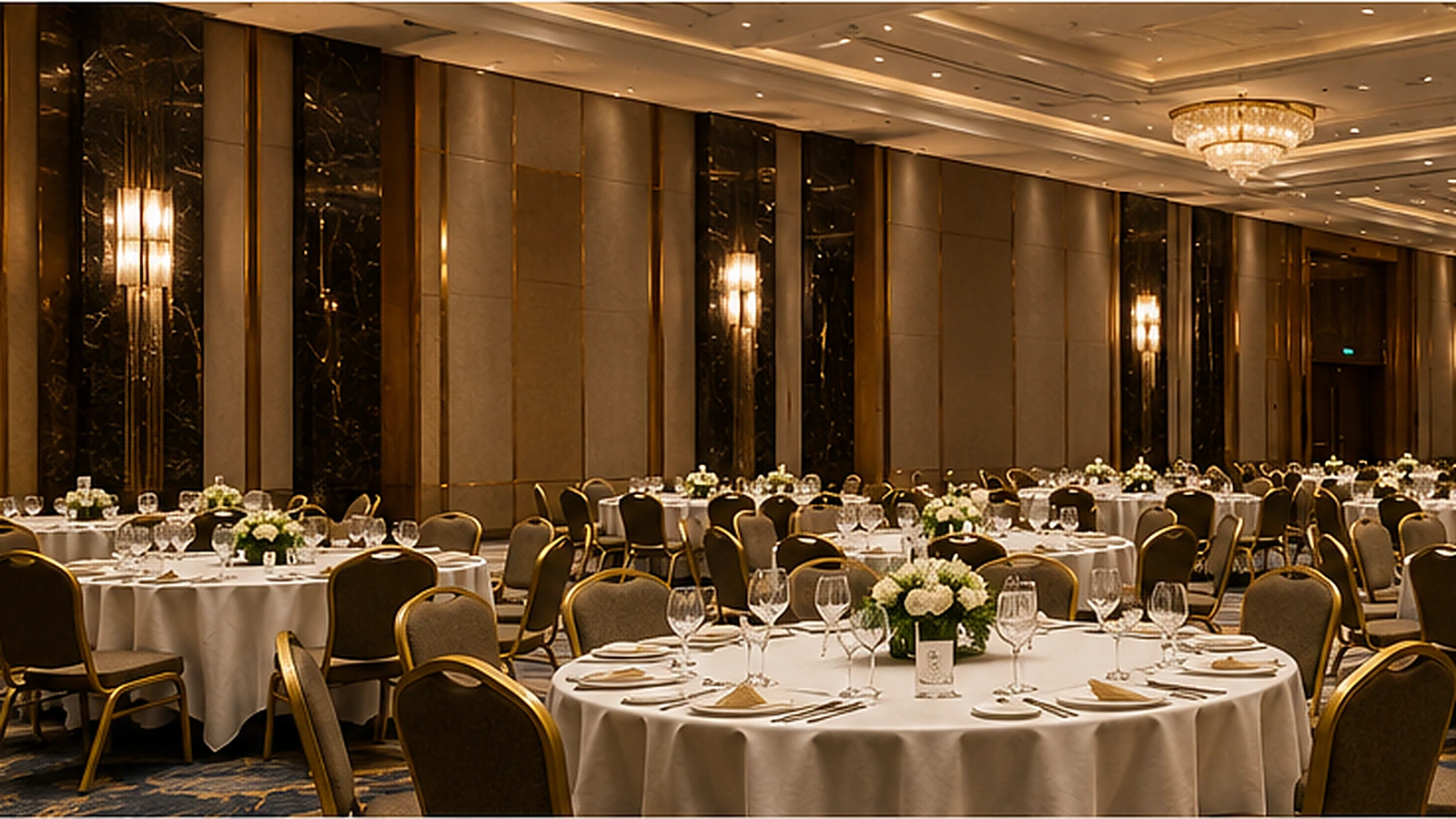
Selecting professional banquet equipment is a strategic decision for any hotel, conference centre, ballroom or event venue. Tables and chairs may define the visual character of a room, but their real value is revealed through repeated setup, transport, storage, cleaning and daily operation.
A product that looks appropriate in a catalogue may not necessarily suit the way a venue works. The right equipment must support different event formats, fit the available storage area, remain manageable for staff and contribute to a consistent guest experience.
This guide explains the main factors hospitality professionals should consider when selecting banquet tables, chairs, meeting solutions, stages, lecterns, portable service equipment and transport systems.
What Is Professional Banquet Equipment?
Professional banquet equipment includes the furniture and operational products used to prepare flexible hospitality spaces for dining, meetings, conferences, weddings, presentations and other events.
A complete banquet and meeting equipment programme may include:
- Banquet tables
- Meeting and conference tables
- Banquet chairs
- Table and chair transport trolleys
- Lecterns
- Portable stages and dance floors
- Mobile bars and separators
- Portable buffet stands
- Storage and handling equipment
Unlike furniture intended for fixed or occasional use, professional banquet equipment must function within an environment that changes regularly. A ballroom may host a conference in the morning, a reception in the afternoon and a gala dinner in the evening.
The equipment should therefore be assessed as an operational system rather than as a collection of individual products.
Begin with the Venue and Its Operational Requirements
The selection process should begin with the venue, not the product catalogue.
Before choosing specific models, define how each event space will be used and how frequently its layout will change. A hotel ballroom with daily events will have different requirements from a private event venue used several times each month.
Important questions include:
- What are the dimensions of the event space?
- What is the target guest capacity?
- Which event formats will be hosted?
- How often will the room be reconfigured?
- How many employees are normally available for setup?
- Where will the equipment be stored?
- What are the dimensions of storage doors, lifts and corridors?
- Will equipment move between different floors or buildings?
- Are custom colours, finishes or dimensions required?
These questions influence product size, weight, folding mechanisms, stacking capacity, trolley selection and the overall quantity required.
A detailed venue plan also helps prevent purchasing equipment that fits the event room but cannot move efficiently through the building.
Choose Banquet Tables Around Function and Layout
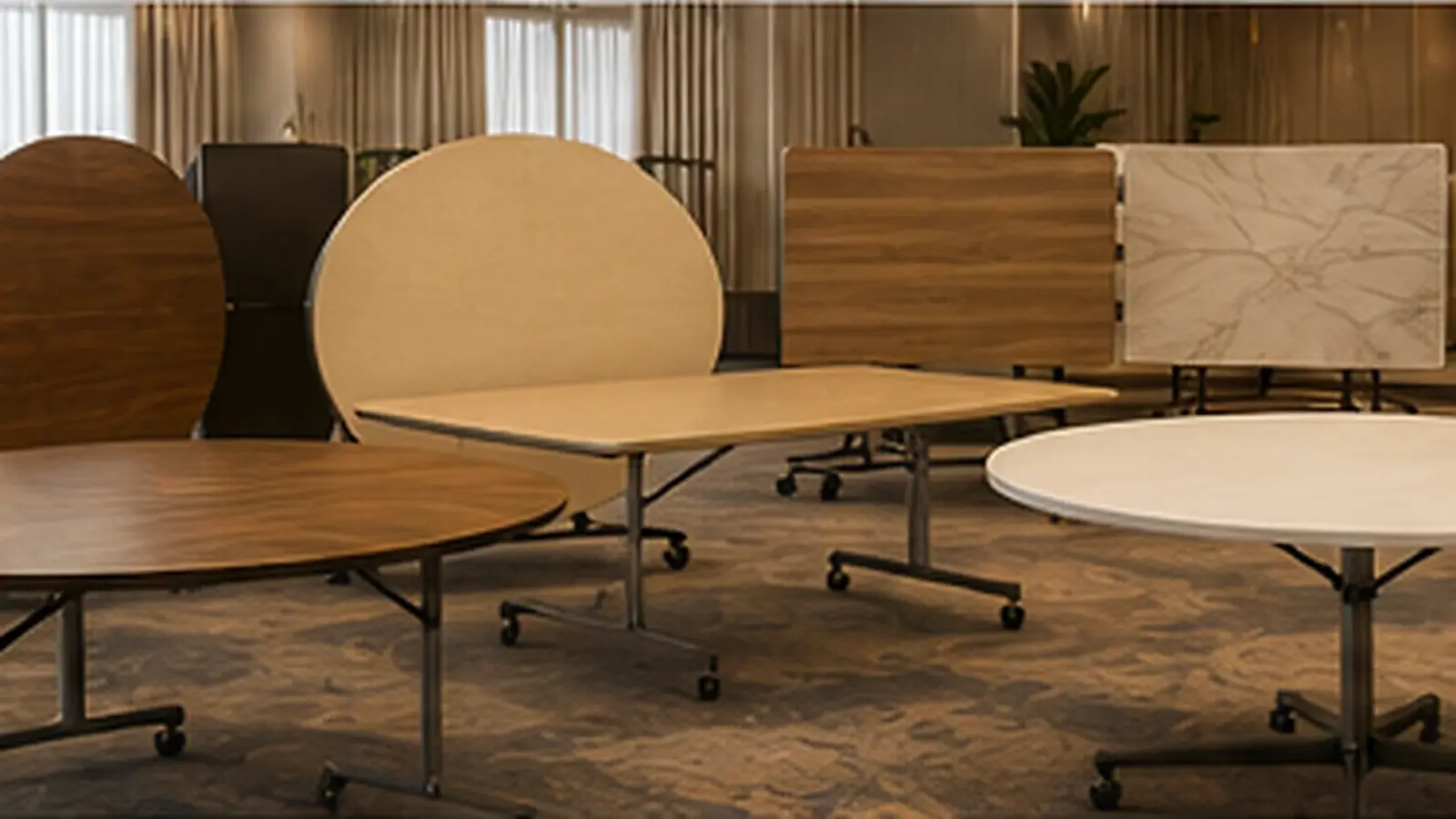
Banquet tables play a central role in guest capacity, service flow and room configuration. Shape and size should be selected according to the events the venue plans to host rather than according to appearance alone.
Round Banquet Tables
Round tables are widely associated with weddings, gala dinners and formal hospitality events. They support conversation between guests and create a balanced visual arrangement across a ballroom.
When evaluating a round table, consider:
- Overall diameter
- Intended seating arrangement
- Space required around occupied chairs
- Service routes between tables
- Folding and locking mechanism
- Tabletop construction
- Edge protection
- Compatibility with transport trolleys
The largest available table is not automatically the best choice. Larger diameters may provide additional seating, but they also require more floor area and may reduce service space.
Rectangular and Meeting Tables
Rectangular tables offer greater flexibility for conferences, classroom arrangements, buffets, registration areas, exhibitions and back-of-house operations.
They can be used individually or combined into:
- Classroom layouts
- Boardroom arrangements
- U-shaped meeting plans
- Long dining arrangements
- Buffet and display stations
- Registration and reception desks
The selected length and width should suit both the intended number of users and the operational space available around the table.
Folding and Handling Systems
A folding base can reduce storage requirements and support faster room changes, but the mechanism should be practical for frequent professional use.
During product evaluation, review:
- How the legs open and close
- Whether the system locks securely
- Whether hands remain clear during operation
- How the folded tables rest on a trolley
- Whether the frame protects the tabletop during transport
- How many employees are needed to move each table
Staff should ideally be able to understand and operate the system without complicated procedures.
Tabletop Materials and Finishes
The appropriate tabletop construction depends on the intended application, handling frequency and finishing requirements.
Selection criteria may include:
- Structural stability
- Surface durability
- Resistance to routine cleaning
- Compatibility with table linen
- Edge protection
- Product weight
- Repair and maintenance requirements
- Available dimensions and finishes
A professional specification should identify both the visible finish and the construction beneath it.
Evaluate Banquet Chairs for Comfort and Daily Handling
Banquet chairs influence guest comfort, room appearance, staff workload and storage efficiency. Because chairs are generally purchased in large quantities, small differences in weight, stackability or maintenance can have a significant operational effect.
Frame Construction
The chair frame should be evaluated according to the frequency of use, movement requirements and visual concept of the venue.
Steel and aluminium constructions can both be appropriate when properly engineered for their intended application. The correct choice depends on factors such as:
- Product weight
- Required finish
- Handling frequency
- Project budget
- Desired appearance
- Maintenance expectations
- Compatibility with transport equipment
The comparison should be based on the complete chair specification rather than the frame material alone.
Comfort and Upholstery
A banquet chair may be occupied throughout a dinner, conference or presentation. Seat design, back support and upholstery should therefore be assessed together.
Consider:
- Seat dimensions
- Backrest shape
- Foam structure
- Fabric or upholstery type
- Stitching and finishing quality
- Cleaning requirements
- Colour consistency
- Replacement or refurbishment possibilities
The chosen upholstery should suit the venue’s visual identity while remaining practical for professional cleaning and repeated use.
Stackability
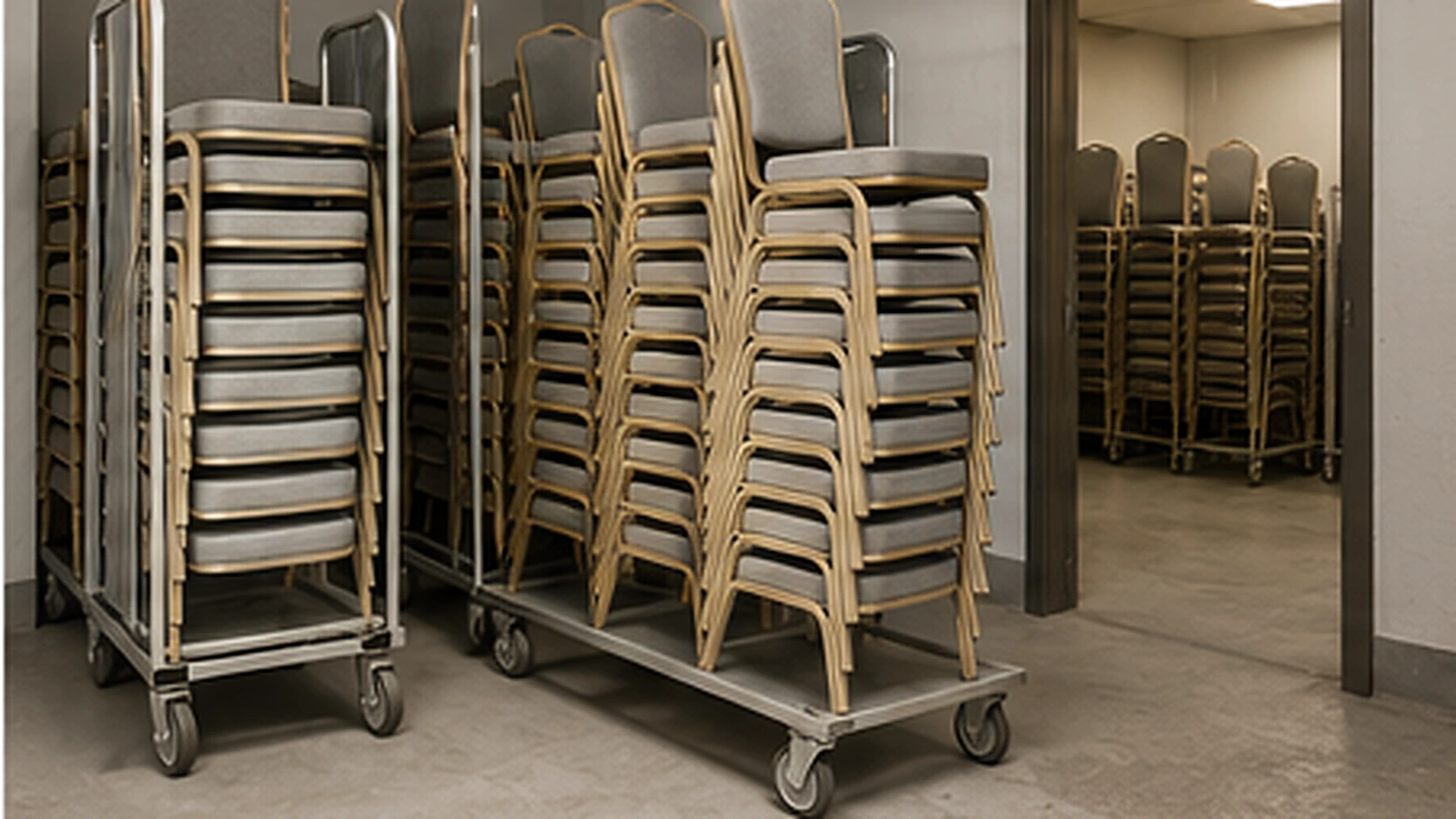
Stackability is one of the most important banquet chair characteristics. However, the maximum possible stack is not the only consideration.
The complete system should be assessed:
- How easily do chairs nest together?
- Does stacking damage the frame or upholstery?
- Is the stack stable during transport?
- Can employees see and control the trolley safely?
- Does the trolley fit through the required doors and lifts?
- How much storage height is available?
A chair and its trolley should be evaluated as a matched system.
Plan Stages, Lecterns and Supporting Equipment
Tables and chairs form the foundation of most banquet spaces, but supporting equipment determines how flexibly the venue can respond to different event formats.
Depending on the property, the equipment programme may also include:
- Modular stages
- Portable dance floors
- Lecterns
- Mobile bars
- Room separators
- Portable buffet stands
- Service and presentation equipment
Stage and Dance Floor Systems
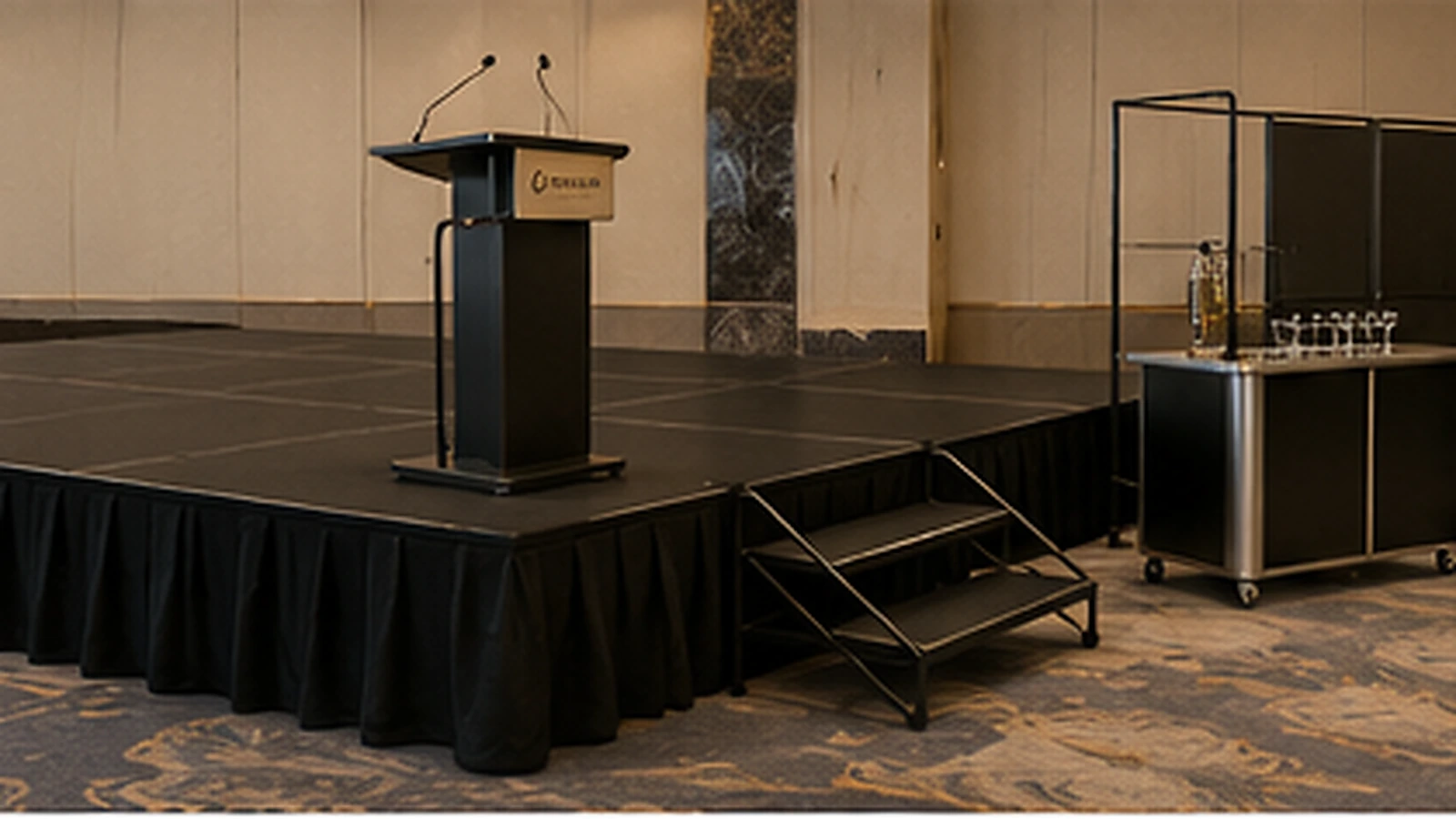
Portable systems should be planned according to the events they will support, their installation method and the available storage area.
Review:
- Module dimensions
- Intended configurations
- Surface finish
- Edge and corner details
- Setup sequence
- Transport method
- Storage arrangement
- Access requirements
- Integration with the room design
The system should provide sufficient flexibility without introducing unnecessary components or complex setup procedures.
Lecterns and Presentation Equipment
Lecterns should complement the venue’s interior while supporting practical presentation requirements.
Important considerations include:
- Overall dimensions
- Reading surface
- Cable routing
- Microphone requirements
- Branding options
- Mobility
- Storage
- Surface finish
A lectern is often highly visible in photographs and presentations, making design consistency particularly important.
Portable Buffet and Mobile Service Solutions
Portable buffet stands and mobile bars allow venues to adapt food and beverage service to different layouts.
When selecting these products, consider:
- Movement and manoeuvrability
- Wheel and brake systems
- Working height
- Storage dimensions
- Cleaning access
- Surface materials
- Modular combinations
- Visual compatibility with the event room
Service equipment should improve both guest presentation and staff workflow.
Treat Transport and Storage as Core Specifications
Transport and storage equipment should not be treated as accessories added after the main furniture order. They are part of the operational system.
Poor storage planning can lead to:
- Unnecessary handling
- Longer setup times
- Product damage
- Congested storage rooms
- Difficult trolley movement
- Inefficient use of staff
- Damage to floors, walls and door frames
Before confirming an order, create a storage plan showing where each product group will be placed.
The plan should identify:
- Table storage positions
- Chair stack positions
- Trolley parking areas
- Stage and dance floor storage
- Clear movement routes
- Access to frequently used equipment
- Safe clearance around doors and building services
Equipment that is used most frequently should remain easy to access without requiring other products to be moved first.
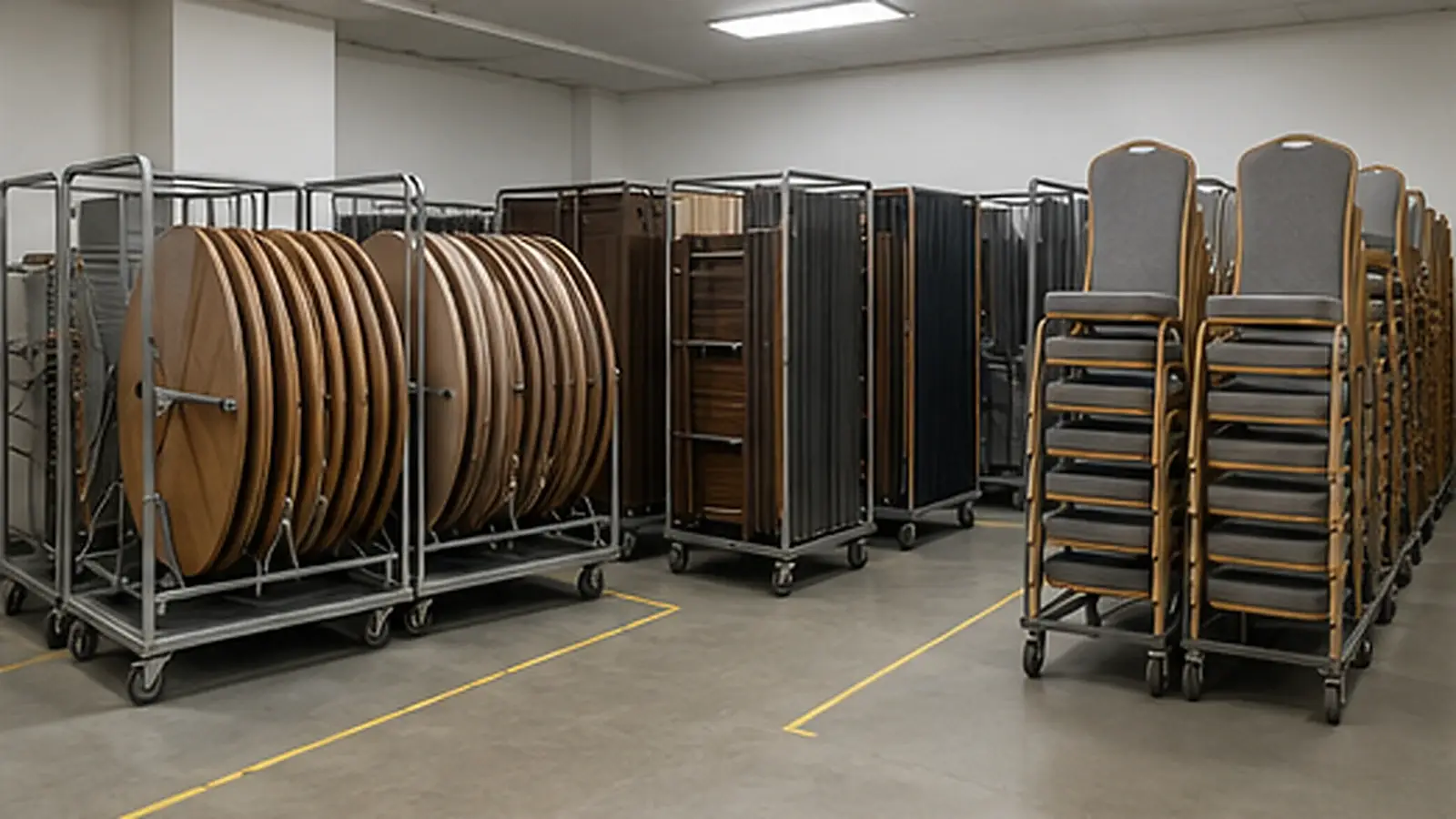
Transport trolleys and storage planning should be included in the initial equipment specification.
Trolley Compatibility
A transport trolley should be selected for the specific product it will carry.
Review:
- Product capacity
- Overall loaded dimensions
- Wheel type
- Brake system
- Turning requirements
- Handle position
- Loading method
- Product protection
- Stability when parked
- Storage footprint
The highest-capacity trolley is not necessarily the most efficient. A smaller trolley that moves safely through the venue may provide better daily performance.
Review Materials, Finishes and Customisation Together
Professional hospitality projects often require equipment to follow an established interior concept or brand standard.
Possible customisation areas include:
- Frame colours
- Metal finishes
- Upholstery fabrics
- Tabletop finishes
- Edge details
- Product dimensions
- Logo applications
- Branding elements
- Functional adaptations
Customisation should always be reviewed alongside production feasibility, quantities, delivery planning and long-term maintenance.
A unique colour or material may look attractive at the specification stage, but the venue should also consider whether it can be repaired, cleaned or matched in the future.
Request physical finish samples where colour and texture are important. Digital screens and printed documents may not represent materials accurately.
Compare Total Operational Value, Not Only Purchase Price
Initial price is important, but it is only one part of the purchasing decision.
Professional equipment creates value through:
- Reliable daily operation
- Efficient setup and breakdown
- Space-efficient storage
- Reduced handling complexity
- Easier cleaning
- Product consistency
- Maintenance possibilities
- Long-term availability
- Appropriate packing and delivery coordination
A lower-priced product may become less economical when it requires more staff, occupies additional storage space or needs frequent replacement.
A useful comparison should therefore include:
- Initial product cost
- Transport and delivery requirements
- Setup and handling requirements
- Storage efficiency
- Cleaning and maintenance
- Expected frequency of use
- Replacement or refurbishment options
- Compatibility with future purchases
The best selection is the one that provides the strongest balance of function, appearance and long-term operational value for the specific venue.
Build a Coordinated Equipment Specification
A clear specification allows suppliers to understand the project and makes competing quotations easier to compare.
For each product, include:
- Product category
- Required quantity
- Preferred dimensions
- Intended application
- Material preferences
- Colour and finish requirements
- Upholstery requirements
- Branding requirements
- Trolley or storage needs
- Required delivery schedule
- Delivery destination
Also provide general project information:
- Venue type
- Maximum guest capacity
- Number of event spaces
- Typical event formats
- Storage conditions
- Relevant drawings
- Interior design references
- Target project programme
Where available, floor plans and storage drawings can help the manufacturer recommend suitable product dimensions and handling systems.
Common Banquet Equipment Purchasing Mistakes
Several common mistakes can create avoidable operational problems.
Selecting Products by Appearance Alone
Appearance is important, but equipment must also suit daily setup, cleaning, transport and storage.
Ignoring the Storage Room
The storage area should be evaluated before product dimensions and quantities are finalised.
Purchasing Trolleys Afterwards
Transport systems should be specified together with the furniture they will carry.
Comparing Incomplete Quotations
Two quotations may appear similar while including different materials, finishes, quantities, packing methods or accessories. Compare the complete scope, not only the final total.
Ordering Without Reviewing Samples
For significant projects, product or material samples can help confirm comfort, finish, handling and visual compatibility.
Failing to Consider Future Expansion
Where a venue may add further rooms or increase capacity, consider whether matching products and finishes can be supplied later.
Leaving Project Information Unclear
Missing dimensions, quantities, finish requirements or destination details can delay technical review and quotation preparation.
Why Work with a Specialist Hospitality Equipment Manufacturer?
A specialist manufacturer can support more than the supply of individual products.
Depending on the project, professional support may include:
- Product selection guidance
- Review of quantities and applications
- Custom dimensions and finishes
- Coordinated product families
- Material sample preparation
- Transport and storage planning
- Technical information
- Export packing
- International project coordination
The manufacturer should understand how the equipment will be used, moved and maintained within a hospitality environment.
Otelsan develops professional banquet, meeting and hospitality equipment for hotels, event venues and international projects. Its product portfolio brings together event furniture, transport systems and operational equipment within a project-oriented manufacturing approach.
Banquet Equipment Project Checklist
Before requesting a quotation, confirm the following information.
Venue Information
- Venue type
- Country and project location
- Event space dimensions
- Maximum guest capacity
- Number of rooms
- Typical event formats
Product Requirements
- Product groups
- Quantities
- Preferred dimensions
- Required finishes
- Upholstery selections
- Customisation requirements
- Branding requirements
Operational Information
- Frequency of room changes
- Available setup staff
- Storage room dimensions
- Door and lift measurements
- Transport routes
- Trolley requirements
Project Information
- Target delivery date
- Destination
- Packing requirements
- Drawings and reference files
- Contact person
- Company information
Providing this information at the beginning of the process supports a more accurate technical review and a clearer project quotation.
Frequently Asked Questions
What equipment is required for a hotel banquet hall?
Requirements vary according to the venue, but a professional programme commonly includes banquet tables, meeting tables, chairs, transport trolleys, stages, dance floors, lecterns and portable service equipment.
How should banquet table shapes be selected?
Table shapes should be selected according to room dimensions, event types, guest capacity, service routes and storage conditions. Most venues benefit from a planned combination rather than relying on one table type.
What should be considered when choosing banquet chairs?
Review comfort, frame construction, upholstery, product weight, stackability, trolley compatibility, cleaning requirements and visual consistency.
Why are transport trolleys important?
Appropriate trolleys support safer movement, organised storage, faster setup and better protection of furniture during daily operations.
Can banquet equipment be customised?
Custom dimensions, materials, colours, upholstery and branding may be evaluated according to the product, project quantity and technical feasibility.
What information is needed for a quotation?
Provide product types, quantities, preferred dimensions, finish requirements, delivery destination, project schedule and any available drawings or reference images.
Plan the Complete System
Professional banquet equipment should help a venue adapt efficiently while maintaining a consistent standard of presentation.
The most successful selection process considers the event room, storage area, staff workflow, furniture, transport systems and supporting equipment as one connected system.
By defining operational requirements before selecting products, hospitality professionals can create event spaces that are flexible, refined and practical for long-term professional use.
Explore Otelsan’s Banquet & Meeting Equipment collection to review professional product groups, or consult the complete Product Catalogue for banquet, restaurant, housekeeping and front-office solutions.
For project-based support, share your venue details, quantities, finish preferences and delivery destination with the Otelsan team.