QUICK OVERVIEW
Key Takeaways
- Define the venue, event formats, capacities and operational workflow before requesting product quotations.
- Specify dimensions, materials, finishes, upholstery and performance requirements clearly for every product group.
- Include transport trolleys, storage conditions, packing and delivery scope in the initial procurement package.
- Use physical samples, finish approvals and documented sign-off procedures before mass production.
- Compare quotations against the same technical scope rather than unit price alone.
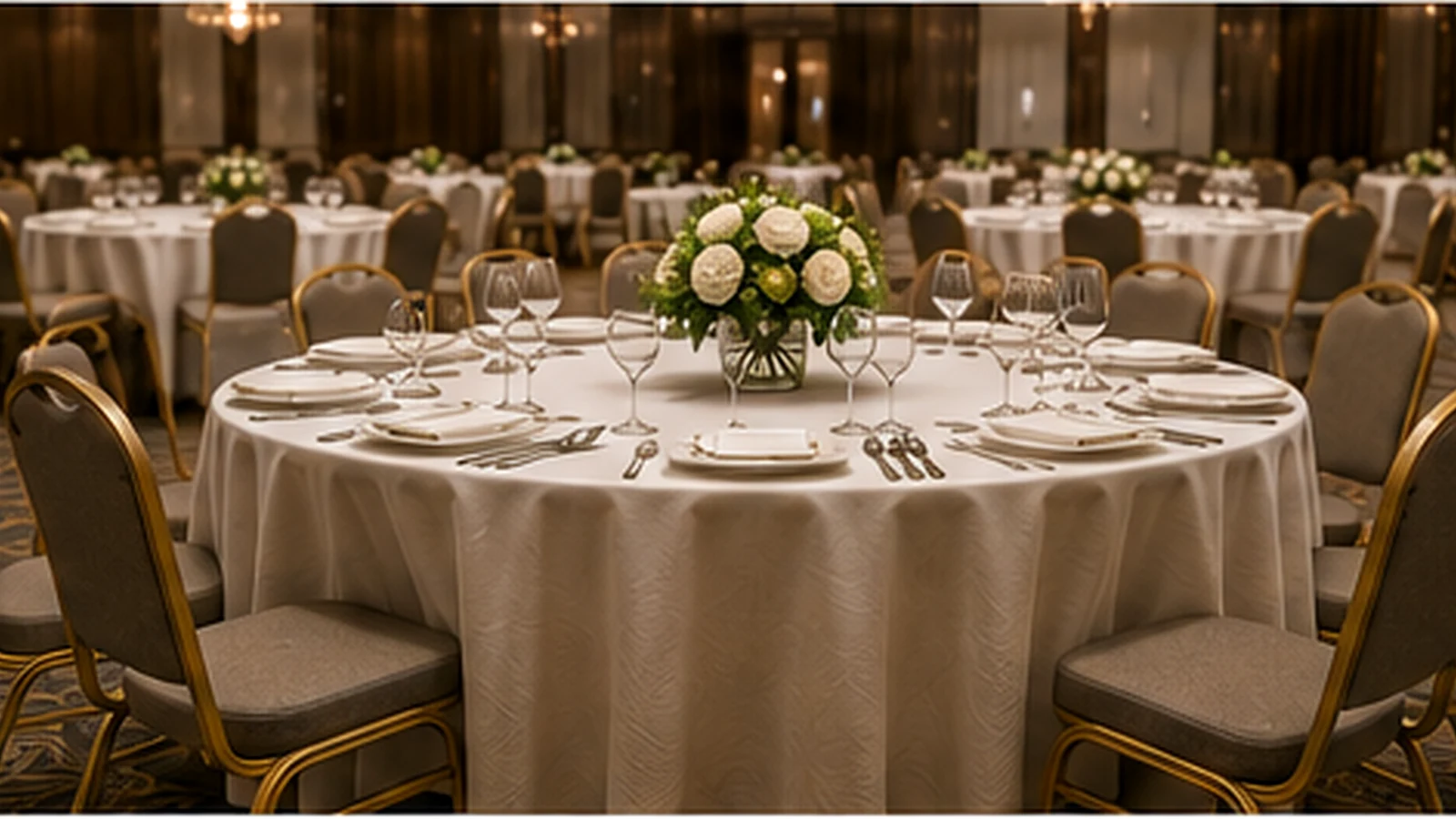
Purchasing professional banquet equipment requires more than preparing a list of tables and chairs. A complete procurement package should define how the venue will operate, which event formats it will support, how the equipment will be moved and stored, and which technical and visual standards the finished products must meet.
Incomplete specifications can lead to quotations that are difficult to compare, unexpected accessories, unsuitable finishes, storage problems and delays during approval or delivery.
A structured procurement checklist helps hotel owners, operators, purchasing teams, consultants and project managers communicate the same requirements to every supplier.
This guide explains the information that should be prepared before requesting quotations for professional banquet and meeting equipment.
For a broader introduction to product selection, review our guide to choosing professional banquet equipment for hotels and event venues.
Why a Procurement Checklist Matters
A procurement checklist creates a common reference for the project team and potential suppliers.
It helps to:
- Define the complete project scope
- Clarify product quantities
- Standardise technical requirements
- Compare quotations fairly
- Identify missing accessories
- Coordinate finishes and materials
- Plan samples and approvals
- Confirm packing and delivery responsibilities
- Reduce changes during production
- Support installation and handover
Without a clear checklist, suppliers may quote different dimensions, materials, finishes or accessories under similar product names.
The final prices may appear comparable even though the proposed scopes are not the same.
Begin with the Project Overview
The procurement package should begin with a concise project summary.
Include:
- Project name
- Property or venue type
- Project location
- Client or operator
- Purchasing company
- Consultant or designer
- Target opening date
- Required delivery date
- Number of event spaces
- Maximum guest capacities
- Main event formats
- Delivery destination
- Primary contact person
This information helps the supplier understand the scale and programme of the project.
Define the Venue Type
Requirements may vary between:
- Luxury hotels
- Conference hotels
- Convention centres
- Wedding venues
- Resorts
- Restaurants with event spaces
- Multi-purpose halls
- Corporate meeting facilities
A ballroom used every day may require different handling and storage priorities from a venue used mainly for occasional events.
Identify Project Stakeholders
Confirm who will approve:
- Product selection
- Technical specifications
- Dimensions
- Materials
- Colours
- Upholstery
- Samples
- Shop drawings
- Packing
- Delivery documents
A clear approval structure reduces conflicting instructions and repeated revisions.
Define the Event Programme
The required equipment quantities should be based on approved event layouts.
List the event formats that the venue plans to support:
- Banquet dining
- Weddings
- Gala dinners
- Classroom meetings
- Theatre seating
- Boardroom meetings
- U-shaped meetings
- Cabaret arrangements
- Receptions
- Exhibitions
- Buffets
- Ceremonies
For layout planning principles, review the Banquet Hall Layout Guide.
The event programme determines the required combination of:
- Round tables
- Rectangular tables
- Meeting tables
- Banquet chairs
- Stages
- Dance floors
- Lecterns
- Mobile bars
- Buffet stands
- Separators
- Transport trolleys
Confirm Quantities with Layout Scenarios
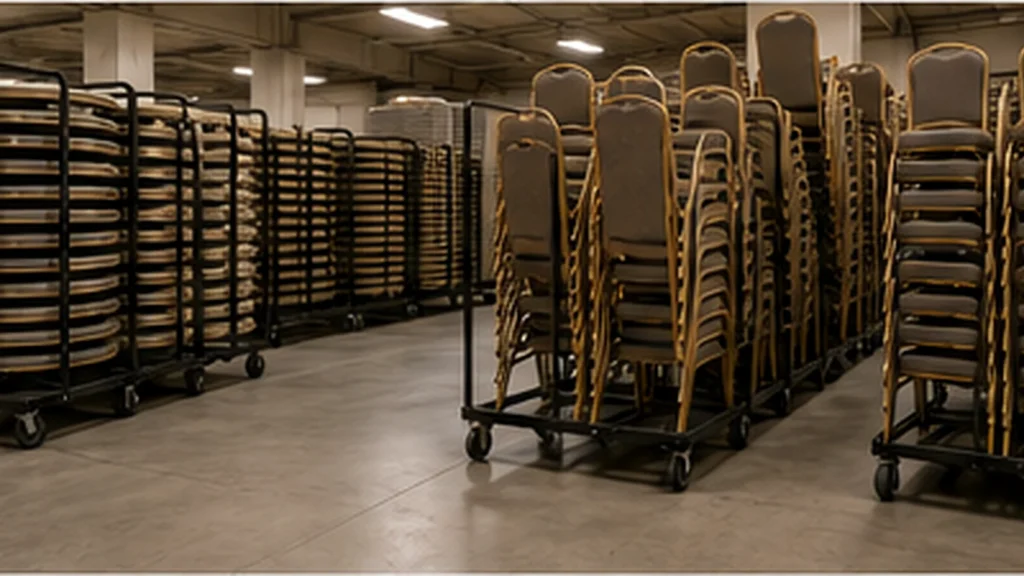
Do not calculate quantities from maximum guest capacity alone.
Prepare approved room plans showing:
- Table types
- Table quantities
- Chair quantities
- Stage modules
- Dance-floor modules
- Buffet stations
- Mobile bars
- Registration tables
- Technical positions
- Operational reserves
Several rooms may share equipment if event schedules and transport routes allow it.
However, shared quantities should be evaluated carefully to avoid operational conflicts.
Include an Operational Reserve
Projects may require additional quantities for:
- Replacement
- Damage
- Simultaneous events
- Layout flexibility
- Future expansion
- Maintenance rotation
The appropriate reserve depends on the property’s operation and should be agreed by the project team.
Prepare a Quantity Schedule
The schedule should include:
- Product reference
- Product description
- Room or department
- Quantity
- Reserve quantity
- Total quantity
- Trolley quantity
- Required delivery phase
- Remarks
Use consistent product references across drawings, specifications and quotations.
Prepare a Separate Specification for Each Product Group
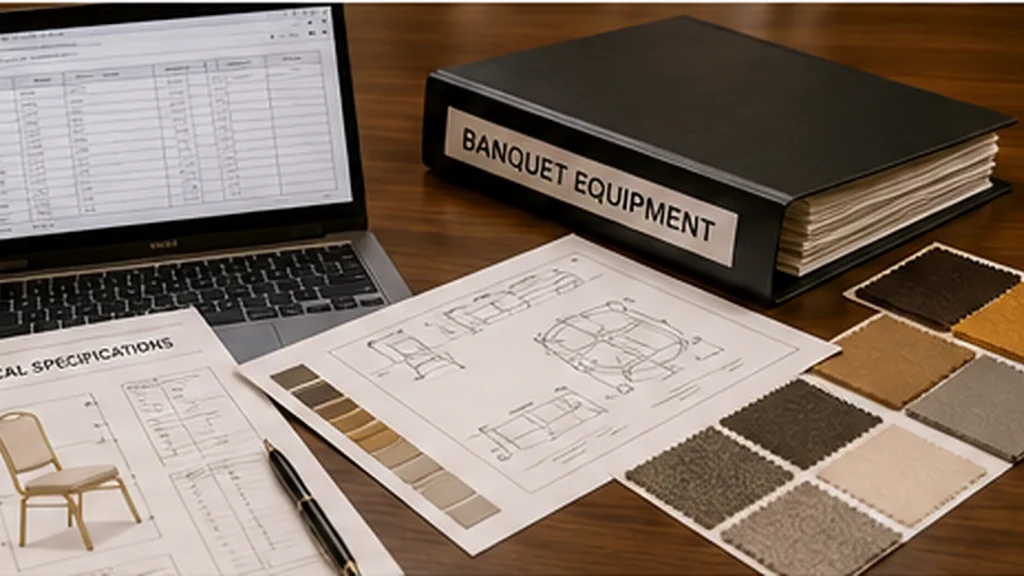
Avoid using one general description for all banquet products.
Each product group should have its own specification.
Typical groups include:
- Banquet tables
- Meeting tables
- Banquet chairs
- Table trolleys
- Chair trolleys
- Portable stages
- Dance floors
- Lecterns
- Mobile bars
- Buffet stands
- Separators
- Supporting accessories
Every specification should define the features that are essential for that product.
Banquet Table Specification Requirements
For professional banquet tables, specify:
- Table shape
- Dimensions
- Table height
- Tabletop construction
- Tabletop thickness
- Surface requirements
- Edge protection
- Frame material
- Frame finish
- Folding mechanism
- Locking system
- Leg position
- Product weight expectations
- Trolley compatibility
- Storage orientation
- Required quantity
Where tables will be used with linen, state whether the visible tabletop finish remains important.
For detailed selection guidance, review the Banquet Table Buying Guide.
Confirm Table Capacity
Do not define table capacity without confirming:
- Chair model
- Chair width
- Place-setting requirements
- Service style
- Centrepiece dimensions
- Guest comfort standards
Capacity claims should be reviewed against the venue’s actual layout.
Banquet Chair Specification Requirements
For banquet chairs, define:
- Frame material
- Frame profile
- Frame finish
- Chair dimensions
- Seat height
- Seat width
- Backrest design
- Seat construction
- Foam requirements
- Upholstery material
- Upholstery colour
- Stitching details
- Protective glides
- Stacking buffers
- Stackability requirements
- Product weight expectations
- Trolley compatibility
- Required quantity
For detailed chair evaluation criteria, review the Banquet Chair Buying Guide.
Define Upholstery Expectations
The specification should clarify:
- Supplier-standard fabric or customer-selected fabric
- Required colour reference
- Pattern direction
- Cleaning requirements
- Performance expectations
- Sample approval
- Replacement availability
Physical samples should be used for final colour and texture approval.
Stage and Dance-Floor Requirements
For portable stage and dance-floor systems, specify:
- Module dimensions
- Total required area
- Surface finish
- Platform height
- Supporting structure
- Connection system
- Edge trims
- Corners
- Stairs
- Handrails where required
- Skirting
- Transport trolleys
- Storage method
- Required layouts
The specification should identify whether the system will be installed in one standard configuration or several modular combinations.
Lectern and Presentation Equipment Requirements
For lecterns, define:
- Overall dimensions
- Reading surface
- Material
- Finish
- Front design
- Branding requirements
- Microphone provisions
- Cable routing
- Power or connection requirements
- Mobility
- Storage
- Required quantity
The visual appearance should be coordinated with the ballroom and stage concept.
Mobile Bar and Buffet Equipment Requirements
For mobile service equipment, specify:
- Overall dimensions
- Working height
- Frame and body materials
- Decorative finish
- Work surface
- Storage compartments
- Wheel type
- Brake system
- Handles
- Service-side configuration
- Guest-facing appearance
- Cleaning requirements
- Trolley or parking requirements
- Required quantity
Where modules will be combined, request drawings showing the complete arrangement.
Include Trolleys in the Initial Scope
Transport trolleys should not be added after the main equipment has been selected.
For every trolley, define:
- Intended product
- Product capacity
- Loaded dimensions
- Loading orientation
- Frame construction
- Wheel type
- Wheel diameter
- Brake system
- Handle position
- Product supports
- Protective contact points
- Parking stability
- Required quantity
The loaded trolley dimensions should be compared with:
- Storage doors
- Service corridors
- Lift doors
- Lift interiors
- Ballroom entrances
- Turning areas
Define Storage Conditions
Provide information about the intended storage areas.
Include:
- Room dimensions
- Door dimensions
- Ceiling height
- Floor material
- Lift access
- Corridor access
- Turning space
- Planned trolley positions
- Storage orientation
- Environmental conditions
- Access restrictions
The supplier may be able to identify conflicts between the proposed products and the storage arrangement before production begins.
Prepare a Storage Plan
The storage plan should show:
- Table trolleys
- Chair trolleys
- Stage trolleys
- Dance-floor trolleys
- Lecterns
- Mobile bars
- Buffet equipment
- Access routes
- Frequently used products
- Required safety clearances
Storage density should not prevent employees from moving equipment safely.
Define Materials and Finishes Clearly
General terms such as “gold”, “wood finish” or “beige fabric” are not precise enough for production approval.
Use documented references for:
- Metal colours
- Powder-coat finishes
- Plated finishes
- Timber colours
- Laminate references
- Fabrics
- Vinyl surfaces
- Stitching
- Edge details
- Decorative panels
Where possible, keep:
- Physical samples
- Approved sample boards
- Colour codes
- Manufacturer references
- Signed approval records
Lighting conditions can change the appearance of colours. Review important samples in the actual project environment where practical.
Identify Customisation Requirements
Customisation may include:
- Product dimensions
- Frame profiles
- Special colours
- Upholstery
- Branding
- Logos
- Decorative panels
- Product numbering
- Storage labels
- Special accessories
- Modified trolley configurations
Custom requirements should be discussed early because they may affect:
- Engineering
- Tooling
- Minimum quantities
- Sample lead time
- Production programme
- Cost
- Future replacement
Avoid approving custom dimensions before confirming storage and transport routes.
Request Technical Documents
Depending on the product and project, request:
- Product data sheets
- Dimension drawings
- Shop drawings
- Finish schedules
- Material samples
- Upholstery samples
- Assembly instructions
- Care instructions
- Packing details
- Warranty information
- Spare-parts information
Documents should use the same product references as the quotation and quantity schedule.
Establish the Sample Approval Process
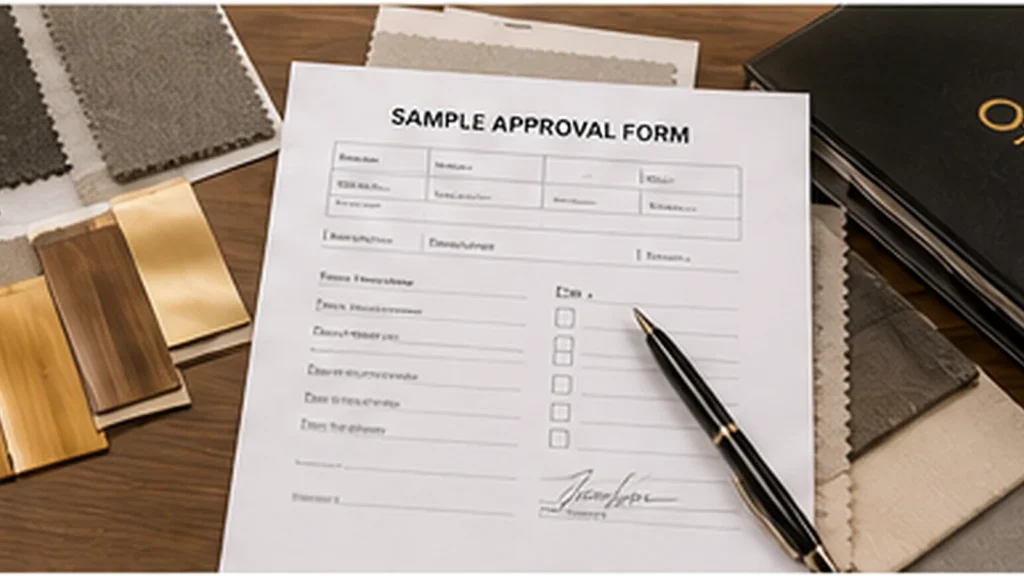
Samples help confirm whether the proposed specification works in practice.
The process may include:
- Material samples
- Finish samples
- Upholstery samples
- Representative product sample
- Revised sample if required
- Final signed approval
The approval record should state:
- Product reference
- Sample date
- Approved dimensions
- Approved finish
- Approved fabric
- Approved modifications
- Approving person
- Approval status
Review Samples Operationally
Do not assess a sample only for appearance.
Evaluate:
- Comfort
- Stability
- Weight
- Folding
- Stacking
- Trolley loading
- Cleaning
- Table compatibility
- Movement through doors and lifts
- Storage
A representative operational test can reveal problems before mass production.
Define Packing Requirements
Packing should be appropriate for the product, transport method and destination.
Clarify:
- Individual or grouped packing
- Carton requirements
- Protective wrapping
- Corner protection
- Surface protection
- Pallet requirements
- Crate requirements
- Product labels
- Room labels
- Shipping marks
- Packing-list format
For international projects, packing should support handling through:
- Factory loading
- Road transport
- Port or airport handling
- Customs inspections
- Final delivery
- Site storage
Request Packing Information
Ask the supplier to provide:
- Package quantities
- Package dimensions
- Gross weights
- Net weights
- Pallet quantities
- Container-loading information where relevant
- Packing photographs where required
This information supports logistics and site planning.
Confirm Delivery Scope
The quotation should state clearly what is included.
Possible delivery terms may include:
- Factory collection
- Delivery to port
- Delivery to destination
- Customs-related responsibilities
- Site delivery
- Unloading
- Internal distribution
- Assembly
- Installation
- Packaging removal
Do not assume that delivery includes unloading or movement inside the property.
Confirm Delivery Constraints
Provide information about:
- Site access
- Vehicle restrictions
- Delivery hours
- Loading-bay dimensions
- Lift dimensions
- Temporary storage
- Floor protection
- Required delivery sequence
- Phased handover
Large equipment may require coordinated delivery planning.
Define the Project Programme
The programme should identify:
- Quotation deadline
- Technical clarification period
- Sample request date
- Sample approval deadline
- Purchase-order date
- Deposit date
- Production period
- Inspection date
- Packing date
- Shipping date
- Target delivery date
- Opening or event date
Allow sufficient time for:
- Custom engineering
- Sample revisions
- Finish approvals
- Material procurement
- Production
- Quality control
- Packing
- International transport
Compressed programmes can increase project risk.
Compare Quotations Against the Same Scope
Create a quotation comparison table.
Compare:
- Product reference
- Quantity
- Unit price
- Included accessories
- Trolleys
- Customisation
- Samples
- Packing
- Delivery
- Installation
- Warranty
- Lead time
- Payment terms
- Exclusions
A lower unit price may not represent a lower total project cost if essential components are excluded.
Clarify Deviations
Request suppliers to identify:
- Specification deviations
- Alternative materials
- Different dimensions
- Excluded accessories
- Assumptions
- Optional items
Unrecorded deviations can cause problems after the order is placed.
Confirm Commercial Requirements
The procurement package should state or request:
- Currency
- Price validity
- Taxes
- Duties
- Payment terms
- Deposit requirements
- Balance-payment timing
- Bank charges
- Delivery terms
- Warranty
- Spare-parts support
- Quotation validity
Commercial terms should be reviewed together with the technical scope.
Plan Inspection and Quality Control
For significant projects, define the required quality-control process.
This may include:
- Pre-production approval
- In-process inspection
- Final inspection
- Quantity verification
- Finish verification
- Function tests
- Packing inspection
- Document review
- Photographic records
The inspection checklist should reflect the approved specification and sample.
Final Inspection Records
Record:
- Product references
- Quantities
- Dimensions
- Colours
- Upholstery
- Folding function
- Stacking function
- Trolley compatibility
- Packing status
- Identified defects
- Corrective actions
Prepare Handover and After-Sales Information
Before project completion, collect:
- Final product list
- Warranty information
- Cleaning instructions
- Maintenance instructions
- Spare-parts list
- Replacement-component references
- Approved finish records
- Upholstery references
- Supplier contact information
This information should remain available to the property’s operations and purchasing teams.
Common Procurement Mistakes
Requesting Prices Before Defining the Scope
Early pricing without clear specifications can create misleading comparisons.
Comparing Product Names Instead of Specifications
Products with similar names may have different construction, finishes and accessories.
Omitting Trolleys and Storage Equipment
Transport systems are essential parts of professional banquet operations.
Approving Colours Digitally
Screens and printed documents may not represent final materials accurately.
Relying on Verbal Approvals
Samples and changes should be documented.
Ignoring Packing and Delivery Scope
A product quotation may not include the logistics services expected by the project.
Changing Requirements During Production
Late changes can affect cost, programme and consistency.
Focusing Only on Unit Price
Total operational value includes handling, storage, maintenance and expected service life.
Banquet Equipment Procurement Checklist
Project Information
- Project name
- Property type
- Location
- Operator
- Target opening
- Delivery date
- Contact person
- Approval team
Venue Information
- Event-room dimensions
- Event formats
- Guest capacities
- Storage-room dimensions
- Door and lift dimensions
- Transport routes
- Delivery constraints
Product Information
- Product references
- Descriptions
- Dimensions
- Quantities
- Reserve quantities
- Materials
- Finishes
- Upholstery
- Accessories
- Trolleys
Approval Information
- Material samples
- Finish samples
- Product samples
- Shop drawings
- Signed approvals
- Revision records
Logistics Information
- Packing method
- Package dimensions
- Package weights
- Delivery terms
- Unloading scope
- Site access
- Delivery sequence
Commercial Information
- Currency
- Price validity
- Payment terms
- Lead time
- Warranty
- Exclusions
- Optional items
Quality Information
- Inspection requirements
- Acceptance criteria
- Packing inspection
- Corrective actions
- Handover documents
Frequently Asked Questions
What information should be included in a banquet equipment quotation request?
Include product types, quantities, dimensions, materials, finishes, trolley requirements, packing expectations, destination and target delivery date.
Should suppliers quote against the same specification?
Yes. A common specification makes technical and commercial comparisons more reliable.
When should samples be requested?
Material and representative product samples should be planned early enough to allow review and revision before production.
Should transport trolleys be included in the original purchase?
Yes. Trolleys should be selected with the equipment they will carry and checked against storage and building routes.
How should custom finishes be approved?
Use physical samples, documented references and written approval records.
What should be checked before issuing a purchase order?
Confirm the final quantities, technical scope, finishes, samples, packing, delivery terms, programme, warranty and payment terms.
Why is a storage plan important during procurement?
The storage plan confirms whether loaded trolleys and equipment quantities can be accommodated and accessed efficiently.
Build a Clear and Comparable Procurement Package
A professional procurement package connects the venue’s event programme with product specifications, operational requirements, approvals, logistics and commercial terms.
The strongest results are achieved when the project team defines:
- What equipment is required
- How it will be used
- How it will be moved
- Where it will be stored
- Which materials and finishes are approved
- How it will be packed and delivered
- Who is responsible for each approval
Clear information allows manufacturers to prepare more accurate proposals and helps purchasing teams compare complete project value rather than isolated unit prices.
Explore Otelsan’s Banquet & Meeting Equipment collection for professional event furniture, transport systems and project-based solutions, or review the complete Product Catalogue for additional hospitality equipment categories.
To prepare a project quotation, share your product schedule, quantities, technical requirements, finish preferences, delivery destination and target programme with the Otelsan team.